

“My AI assistant bought it for me” sounded like a demo-day ploy a few months ago. It is beginning to resemble infrastructure this October. One-tap checkout in Meta’s apps is now powered by Stripe. In AI Mode and the Gemini app, Google’s shopping protocol is operational. Additionally, a “agent wallet” of some sort is being developed by all of the main payment companies.
This is worth a serious look if you sell anything online or are developing a startup that deals with commerce. Not because the revolution has already happened, but rather because the foundation is already being laid, and those that grasp it early on have a quiet advantage.

Plaud Note Pro AI Voice Recorder Transcribe & Summarize for Meetings Calls
Every conversation is covered, in person, on calls, and online. 4 MEMS + 1 VPU microphones with AI beamforming capture every voice…
First, what agentic commerce actually means
It’s easy when the jargon is removed. A portion of a person’s shopping is handled by an AI agent. It locates goods, evaluates them, and, on certain platforms, completes the transaction.
The challenging aspect is that doing so requires a common language. A store must explain to the agent what it sells, how much it costs, whether it is in stock, and how to check out. Additionally, a payment system must enable the agent to make a payment without providing the real card information.
That shared language is arriving in the form of competing protocols:
- Agentic Commerce Protocol (ACP): built by Stripe and OpenAI, released as open source in September 2025. It covers product feeds, carts, checkout and delegated payment.
- Universal Commerce Protocol (UCP): Google’s version, co-developed with Shopify, Etsy, Wayfair, Target and Walmart, and launched in January 2026.
- Machine Payments Protocol (MPP): from Stripe and Tempo, aimed at agents making small or recurring payments on their own.
If that looks like the early days of web standards, it is. Expect some of these to merge, some to fade, and a few to become the default.
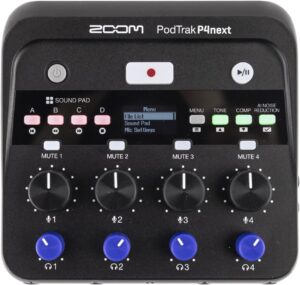
Zoom PodTrak P4next Podcast Recorder with 4 Inputs + AI Noise Reduction
Four XLR inputs with multitrack recording support up to four people plus a call-in guest, giving you flexibility for in-person and remote recording. The P4next’s four XLR inputs provide up to +70dB of gain, allowing you to use even the most demanding podcast mics.
Why We Like It
- Good Sound Quality.
- Compact Design.
- The AI noise cancellation.
Why We Don't Like It
- No dual/redundant recording option via USB
What’s actually live right now
It is worthwhile to keep this section apart from the background noise. Merchants can upload a product catalogue and control which agents can access it directly from the Stripe dashboard, the company said at Stripe Sessions earlier this year. Additionally, it stated that Meta is a partner and that customers can purchase through UCP using Google’s AI Mode and the Gemini app.
However, Meta’s rollout serves as a helpful reminder of reality. “Human-in-the-loop” shopping predominates at the moment. When someone taps an advertisement, an agent takes care of the checkout process. Among the first merchants to use it were fanatics. The customer must also approve the total on each purchase, according to Stripe’s own September notification regarding consumer purchases. Thus, no one has yet given an AI an open wallet. A human still presses the button, but the agent handles the legwork.
According to one statistic, the number of agent-initiated purchases made using Stripe’s Link wallet increased by 38 times in just one month. It’s important to keep in mind that a large multiple off a small beginning base can still be a small absolute number, even though it is an impressive figure.
The cautionary tale you should know about
In this entire field, the most valuable data point may be a disappointing one. One review of Walmart’s initial attempt with selling within ChatGPT found that the conversion rate was about 1.18%. People learned that while discovery within a chat window is effective, completing a purchase there is not yet ready. According to reports, Walmart is now directing customers toward its own assistance.
That pattern keeps showing up. Agents are good at helping someone figure out what to buy. They’re still clumsy at taking the money.
About those big forecasts
You’ll hear forecasts that by 2030, agents will make up 25% of online sales. The CEO of PayPal provided that figure last year. It’s important to note that the person making the statement is a payments corporation that has every reason to be optimistic. It could work out well. Treat it as a direction rather than a timeline because it’s also a forecast from someone who stands to gain if others believe it.

What to do this month (it’s less than you think)
You don’t need to rebuild your store. A few practical moves will cover most of it:
- Clean up your product data. Agents read structured information: accurate titles, sizes, materials, prices, stock levels. Messy or inconsistent catalog data is the single most likely reason an agent skips you.
- Write your shipping and returns policies clearly. An agent comparing two similar products will weigh these. Vague policies lose.
- Check your platform settings. If you’re on Shopify, there’s reportedly an agentic sales channel that may already be switched on by default. Look at your sales channel settings so you know what’s being exposed and to whom.
- Don’t count on ads to win here. OpenAI has said product results in ChatGPT are organic and ranked by relevance, not sponsored. That makes data quality and reputation matter more than bid strategy.
- Watch fraud and disputes. Payments companies are building agent-aware fraud tools, but if your volume rises through a new channel, review chargebacks closely for the first few months.
If you’re building a startup in this space
There are actual gaps. Merchants will want assistance with the quality of their catalogues, identifying the agents that are generating traffic, and limiting the actions of those agents. Giants abound in the payments layer. The mundane operational things and the tools surrounding it are completely exposed.
Bottom line
Agentic commerce is real, in its infancy, and currently primarily under human supervision. It is not a wise decision to make an investment on the 2030 forecast. It involves spending a weekend simplifying your regulations and product data so that a machine can read them. You will already be on the shelf if agents decide to shop for half of the planet.
Know a store owner who hasn’t heard of any of this? Forward it along. And if you want a follow-up on how to audit your catalog for agent readiness, reply and tell me your platform.