
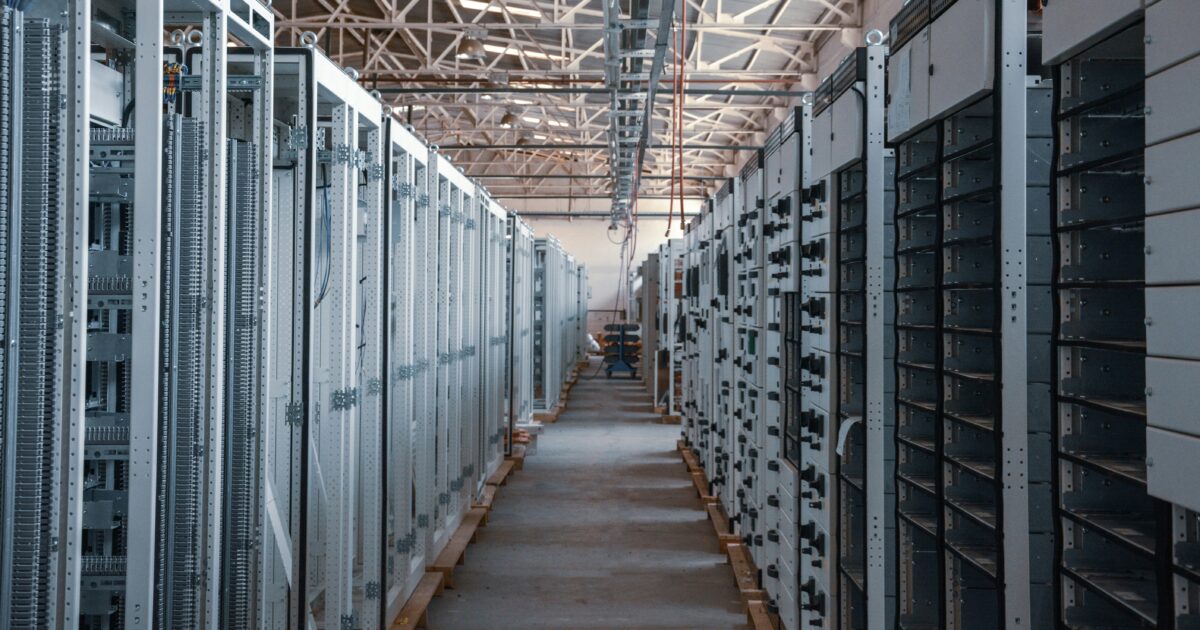
The largest obstacle facing the AI business in recent years has been chips: who could obtain enough GPUs and how quickly? That is still true, but in 2026, electricity has subtly surpassed it as a constraint. The industry has reached a point where the speed at which AI companies may expand is determined by power availability rather than compute availability.
The Numbers Are Bigger Than Most People Realize
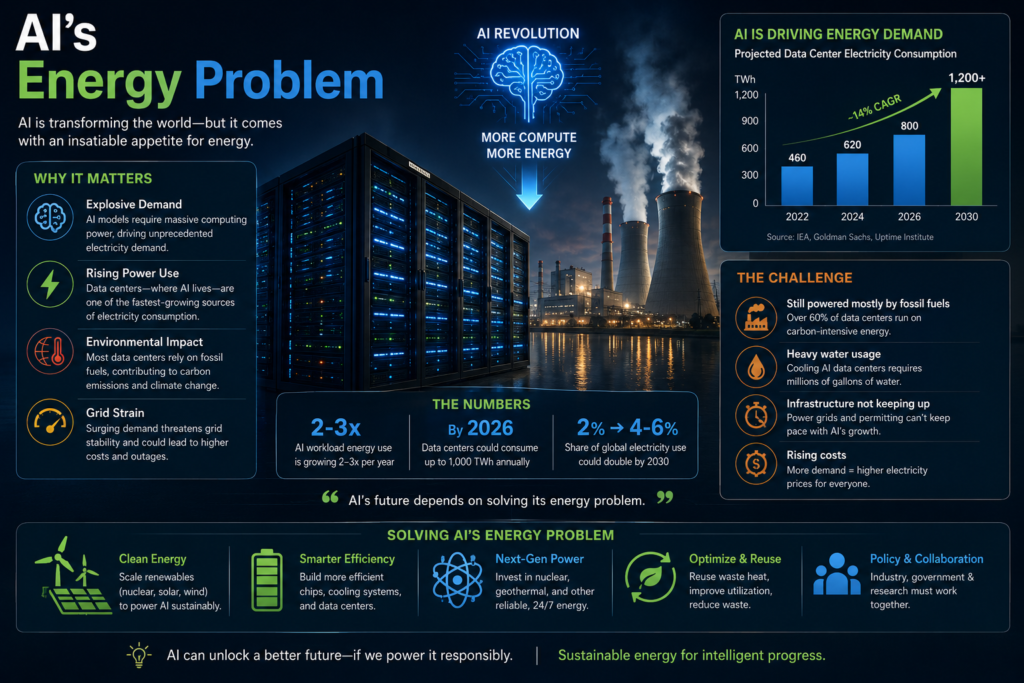
The demand for data center power is expected to increase by almost 27% from the previous year to 565 terawatt-hours in 2026. The demand for data center electricity is predicted to increase from 104 gigawatts in 2025 to 132 gigawatts this year and to around 290 gigawatts by 2030.
Almost all of that growth can be attributed to AI-optimized servers. While AI-optimized servers are rising at a rate of about 84% per year, conventional server power consumption is almost flat, growing by less than 2.5% to 2027. Analysts predict that by 2027, AI servers will consume more power than all of the world’s conventional servers put together, marking a truly historic change in the way data centers utilise electricity.
Why Efficiency Gains Aren’t Enough to Offset This
AI isn’t becoming less effective; on the contrary. The amount of power used for each individual AI task has been decreasing at a rate that is unprecedented in the history of energy. However, the sheer increase in the number of people utilising AI and how demanding those uses have grown is overwhelming that efficiency advantage.
In instance, agentic AI systems, those that require multiple steps to finish a task instead of responding to a single prompt, consume significantly more energy per use than a straightforward chatbot query.
The net effect: efficiency is improving, usage is exploding faster, and total demand keeps climbing regardless.
How the Industry Is Responding
There are a few distinct trends in the ways businesses are attempting to address the electricity issue:
● Nuclear and small modular reactors: hyperscalers’ commitments to conditional nuclear offtake agreements have increased from around 25 gigawatts at the end of 2024 to about 45 gigawatts currently.
Natural gas as a stopgap: As utilities prioritise reliability for always-on AI workloads, even when it complicates carbon requirements, planned natural gas capacity has increased dramatically.
● On-site generation: In order to avoid long grid connectivity line-ups, which are currently a bigger bottleneck than permits or land, developers are increasingly constructing power generating directly at data centre sites.
● Regional grid strain: some grid zones, particularly in Virginia, already see data canters consuming close to 40% of local electricity, a concentration that’s starting to shape state-level energy policy.
What This Means Beyond the Data Center
This isn’t just an infrastructure story — it has ripple effects worth understanding if you’re building or investing in anything AI-adjacent:
For AI-dependent startups: Compute availability and pricing may increasingly depend on power access as much as chip supply, which could affect cost predictability for AI-heavy products.
For energy and infrastructure investors: The pipeline of nuclear, gas, and grid investment tied to AI demand is a genuinely new, fast-growing category, not a niche side bet anymore.
For anyone building in a power-constrained region: Local grid capacity is becoming a real site-selection factor for data-center-dependent operations, not just a cost line item.
The Bottom Line
For the past few years, the AI sector has been concerned about chip shortages. The most significant limitation in 2026 will be the amount of electricity available, the speed at which it can be transported to a data canter, and the distribution of priority access.
Gains in efficiency are genuine, but they fall well short of meeting demand. The next AI competitive advantage truly belongs to the first person to solve the power challenge.
Crunch Brief covers the infrastructure stories behind the AI headlines, subscribe for the weekly rundown.