

The largest AI firms have been operating in a sort of financial mystery box for the past few years. The valuations were known to us. The funding rounds were known to us. The margins, burn rate, and unit economics of operating a chatbot with hundreds of millions of users were all metrics we were unaware of. This is about to change, and most individuals developing on top of these companies are unaware of how big of a deal it is.
What’s actually happening
Within a week of one another this summer, Anthropic and OpenAI filed confidentially for initial public offerings (IPOs), with Anthropic going first. After a funding round in May, Anthropic’s most recent private valuation came in at about $965 billion. According to more recent reports, the company may aim for a public valuation as high as $2 trillion by the time it lists, thanks to annualised revenue that reportedly shot up from about $1 billion at the end of 2024 to almost $47 billion by May of this year.
A week later, OpenAI filed at a projected valuation of $852 billion, although its own timeframe has reportedly shifted toward a potential 2027 listing after a rough public debut from another well-known AI-adjacent IPO dampened some of the market’s desire for imminent
A week later, OpenAI filed at a reported $852 billion valuation, although its own timeframe has reportedly shifted toward a potential 2027 offering after the market’s desire for quick action was dampened by another high-profile AI-adjacent IPO’s rough public debut.
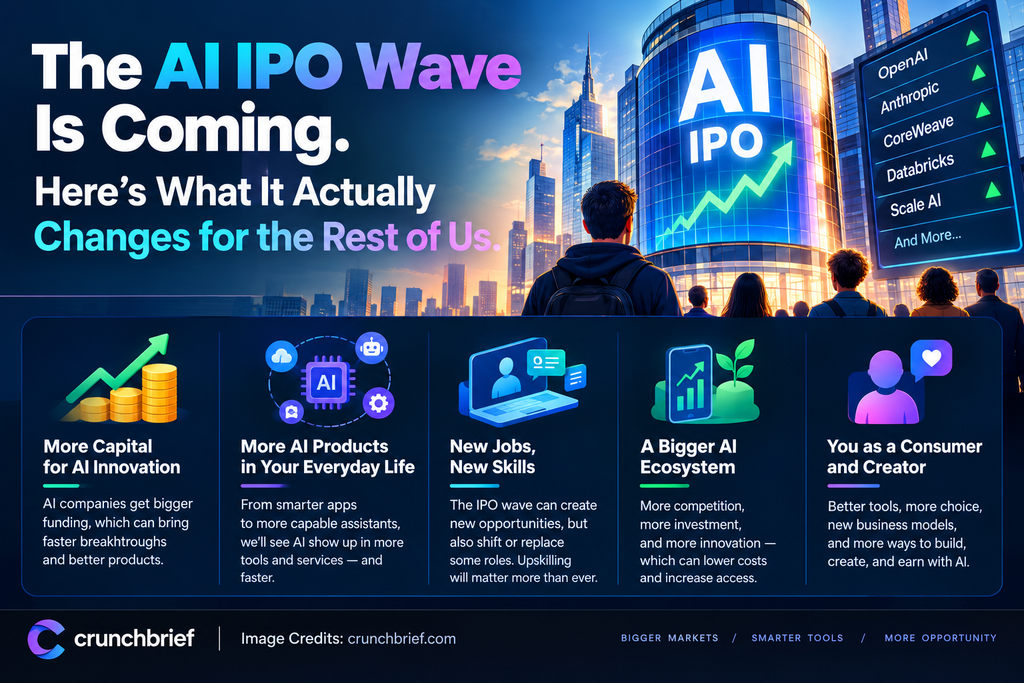
This will be more than just a big tech story if both listings occur anywhere close to the numbers currently being touted. For either business alone, it will be one of the biggest IPOs in history, and having two of them occur within the same general timeframe is the kind of occurrence that changes the pricing of every future tech IPO for years to come.
Why “we’ll finally see the real numbers” actually matters
As of right now, when OpenAI or Anthropic announce anything like “annualised revenue crossed $47 billion,” you have to believe them. When an S-1 is made public, everything of its information,
including margins, customer concentration, and cash burn, becomes an audited disclosure rather than a claim. That’s a truly novel form of inspection for an industry that has relied almost completely on private values determined by whoever is prepared to write the largest cheque.
You care about that for two reasons, even if you’ll never own stock in either company.
First, it resets how every AI startup’s revenue claims get read. “We have strong revenue growth” is no longer an impressive enough statement on its own once investors can see exactly how a company with tens of billions of dollars in revenue turns that into actual profit, or fails to do so. The criterion for “prove it” now has a public, audited reference point, so expect due diligence on lesser AI businesses to get sharper as a direct result.
Second, it’s a live test of whether the market believes AI companies deserve software-company multiples or something closer to infrastructure-company multiples. These companies are valued more on their prospective share of global computer infrastructure than on recurring revenue multiples, as is the case with traditional SaaS businesses. The answer will affect how every AI firm downstream, including the one you may be constructing, is valued. However, it is still unclear whether public markets truly agree with that framing once they see the expenditure needed to sustain it.
What this means if you build on their APIs
A public listing alters your risk profile in ways that should be considered now rather than later if your product is built on Claude or GPT-something. Compared to private organisations, public corporations are subject to different challenges, such as quarterly earnings calls, shareholder scrutiny of margins, and pressure to demonstrate a path to profitability on a timeframe that investors can see.
According to some reports, one of these businesses doesn’t anticipate turning a profit until the end of the decade. Pricing adjustments, new usage tiers, and changes in the order in which use cases are given priority for dependability and support are some examples of how this type of pressure manifests itself.
You shouldn’t panic or abandon your integration because of any of these. Knowing which aspects of your product would suffer if a pricing model changed is important, as is having a good idea of how you would adjust.
The talent and governance wrinkle worth watching
One structural aspect of this wave of initial public offerings (IPOs) that receives insufficient attention is the odd corporate structures that are coming public. These arrangements, such as capped-profit subsidiaries under nonprofit boards and public benefit corporation status, allow the companies to formally consider objectives beyond pure shareholder return.
However, they also mean that public investors will be closely examining something that most initial public offerings (IPOs) never have to explain: how a company balances growth and profit against a stated safety mission.
One of the most fascinating governance stories in tech over the next two years will be how that scrutiny manifests itself in public, in shareholder letters and earnings calls. If you’re interested in how these labs make policy and product decisions that impact the tools you develop with, it’s worth keeping an eye on.
What to actually do with this
To make the most of this moment, you don’t need a trading account. Three worthwhile tasks for the upcoming months are:
The final S-1 filings should be bookmarked. When they go public, they will provide one of the most thorough insights into the true costs of operating a frontier AI lab that anyone outside of these organisations has ever had. This will be extremely helpful competitive information for anyone building in this area.
Put your own dependence to the test. What would happen to your margins if the company you work for raised prices by 20% tomorrow? If you don’t know, it’s worthwhile to find out before it becomes a real issue rather than a hypothetical one.
Pay attention to the response, not just the increase. You may learn more about public markets’ reactions to the audited statistics via Pay attention to the response, not just the increase. More information regarding the durability of present AI values will be revealed by how public markets react to the audited statistics than by any private fundraising round to date.
It’s time to open the mystery box. You may learn a lot about the physical ground that everyone in this room is standing on by paying attention to what’s inside.
Do you know anyone developing a product on top of GPT or Claude that hasn’t considered pricing risk? Send this on. Next week: When a foundation model corporation must account to public shareholders, what does that actually mean for API pricing?