
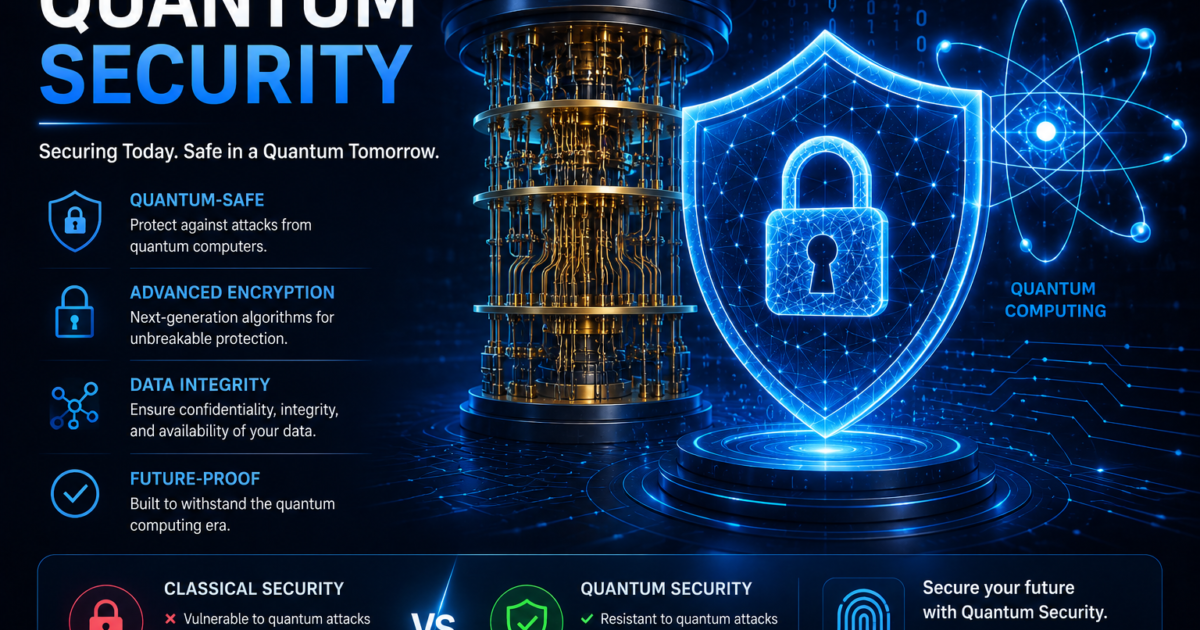
Quantum computing has lived in the “someday, not my problem” category of tech news for years. That’s starting to change, and the shift matters even if you’ve never touched a qubit yourself, because the thing quantum computers threaten to break is the encryption your product almost certainly depends on.
The Threat, in Plain English
Most of the internet’s security the encryption protecting logins, payments, and stored data relies on math problems that are extremely hard for classical computers to solve. A sufficiently powerful quantum computer could solve some of those problems dramatically faster, effectively breaking widely used encryption standards like RSA-2048.
Recent research estimates that RSA-2048 encryption could be broken in under a week using under a million noisy qubits a number that sounded comfortably far off a few years ago and now looks closer than most roadmaps assumed.
“Harvest Now, Decrypt Later” Is Already Happening
Here’s the part that makes this an urgent problem rather than a distant one: attackers don’t need a working quantum computer today to benefit from one tomorrow. Encrypted data being stolen right now can simply be stored and decrypted later, once the technology catches up. If your start-up holds any data with a long shelf life health records, financial history, identity documents, legal contracts that data is a target today, even though the decryption capability doesn’t exist yet.
The Regulatory Clock Is Already Ticking
This isn’t purely a hypothetical risk assessment anymore. The European Union has issued a formal roadmap requiring member states to begin migrating to post-quantum cryptography (PQC) by the end of 2026, with critical infrastructure required to complete the transition by 2030. Investment in quantum-adjacent security is accelerating in step, the sector pulled in billions in start-up funding as the risk moved from academic to operational.
If you sell into regulated industries or into Europe, this timeline isn’t optional homework. It’s becoming a procurement requirement.
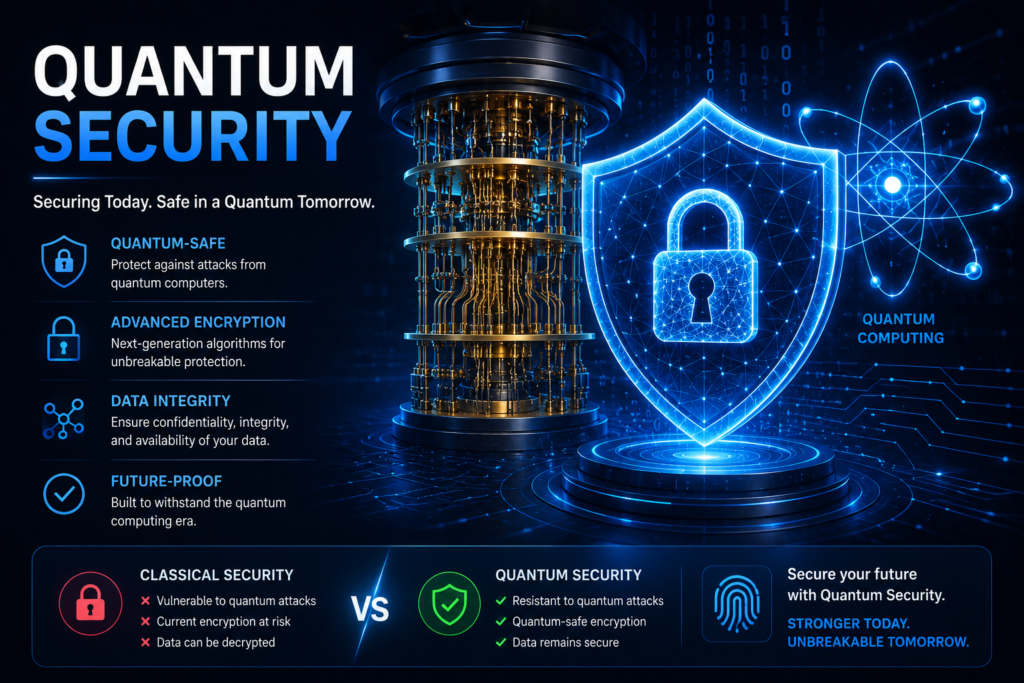
What This Means If You’re Not a Security Company
You don’t need to become a cryptography expert to take this seriously. A few things worth knowing:
- Post-quantum cryptography standards already exist, NIST has finalized several, so this is an implementation problem, not a research problem.
- Migration is usually more about inventory than rewriting everything: knowing where encryption lives in your stack is often the hardest part.
- “Crypto-agility”, designing systems so encryption methods can be swapped without a full rebuild, is quickly becoming a best practice worth adopting now, before it’s forced on you.
A Realistic Starting Point
- Inventory where and how your product uses encryption in transit, at rest, and in third-party services you depend on.
- Flag any long-lived sensitive data as a higher priority that’s what “harvest now, decrypt later” attackers actually want.
- Ask your infrastructure and cloud providers about their PQC migration timelines much of this burden can be shared, not owned entirely by you.
- Build crypto-agility into new systems now, so swapping encryption standards later doesn’t require a rebuild.
The Bottom Line
Quantum computing breaking real-world encryption isn’t a next-decade problem anymore it’s a next-few-years problem, and the data being harvested for future decryption is being stolen today. For start-ups, this is one of those rare cases where being early costs relatively little and being late could cost everything. You don’t need to solve this in a weekend, but you do need it on the roadmap now, not after the deadline is already close.
Crunch Brief covers the technology shifts that quietly become urgent subscribe to stay ahead of them.